

Scientists at St. Petersburg State University have developed a remote method for measuring heating in microelectronic devices — a method based on the ability of a phosphor to change its luminescence upon heating. The work was carried out using the unique equipment of the SPbU Research Park. As a result, the proposed materials could be used in microelectronics and medicine for precision, non-contact temperature control of integrated circuits and living cells. The findings of the research, supported by a grant from the Russian Science Foundation, have been published in the scientific journal Applied Materials Today.
Conventional temperature measurement methods are poorly suited for use in microelectronics. Contact sensors are too large compared to microchip components and are susceptible to electromagnetic interference, making it difficult to accurately establish thermal conditions. An alternative approach is remote luminescence thermometry, which is rarely used due to its low sensitivity over a wide temperature range and the dependence of its signal on random external factors.
Luminescent sensors detect the heat emitted by a microchip component and change their optical characteristics. By tracking these changes, specialists can determine the temperature with much greater accuracy. This approach allows rapid measurement of heating levels even for very small objects without damaging their structure. However, the optimal composition for such luminescent sensors has not yet been identified.
Specialists from the Resource Centre for Optical and Laser Materials Research at the SPbU Research Park proposed using rare-earth element oxides (compounds with oxygen) modified with charged particles (ions) of erbium and ytterbium, as materials for temperature monitoring. These elements were chosen not only because of their luminescent properties but also due to the possibility of accurate synthesis: they are capable of noticeably changing their luminescence even with minor heating. The resulting samples displayed intense luminescence both upon cooling and upon heating.
The SPbU Research Park is a unique shared research centre that enables conducting research using advanced equipment under the guidance of outstanding contemporary scientists. Today, the SPbU Park comprises 22 resource centres, equipped with nearly 1,600 units of scientific, educational, and auxiliary instrumentation, including over 155 unique facilities.
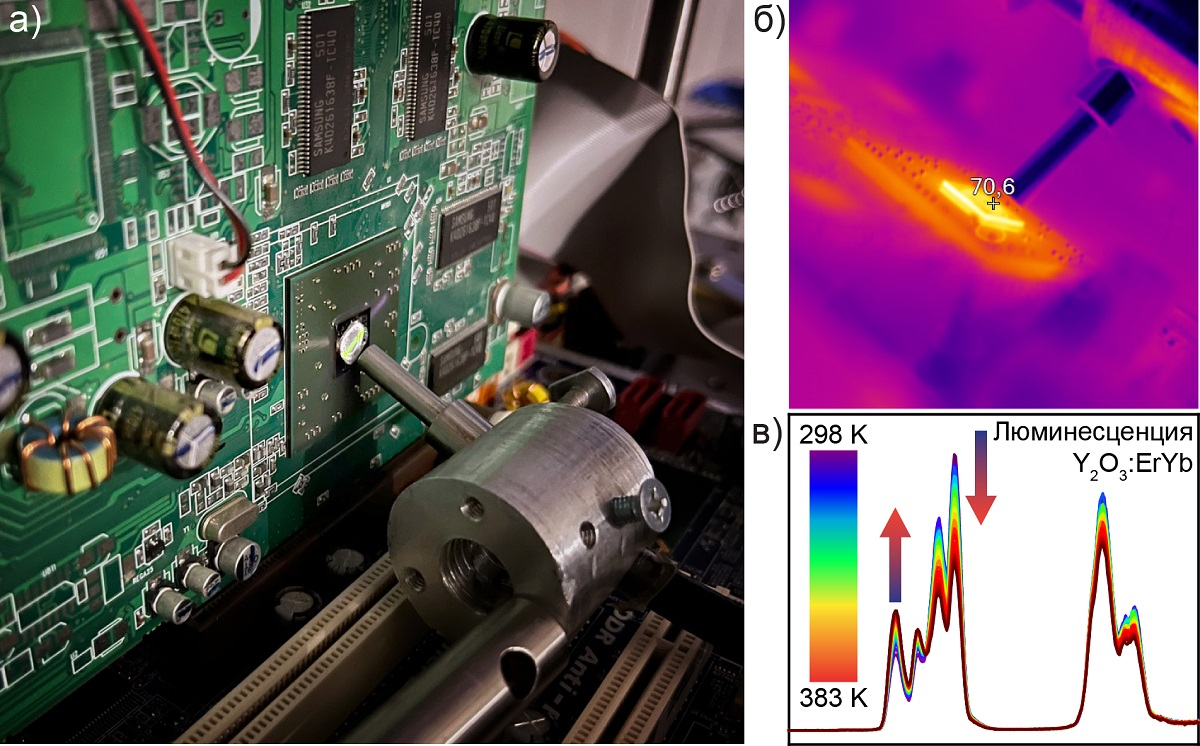
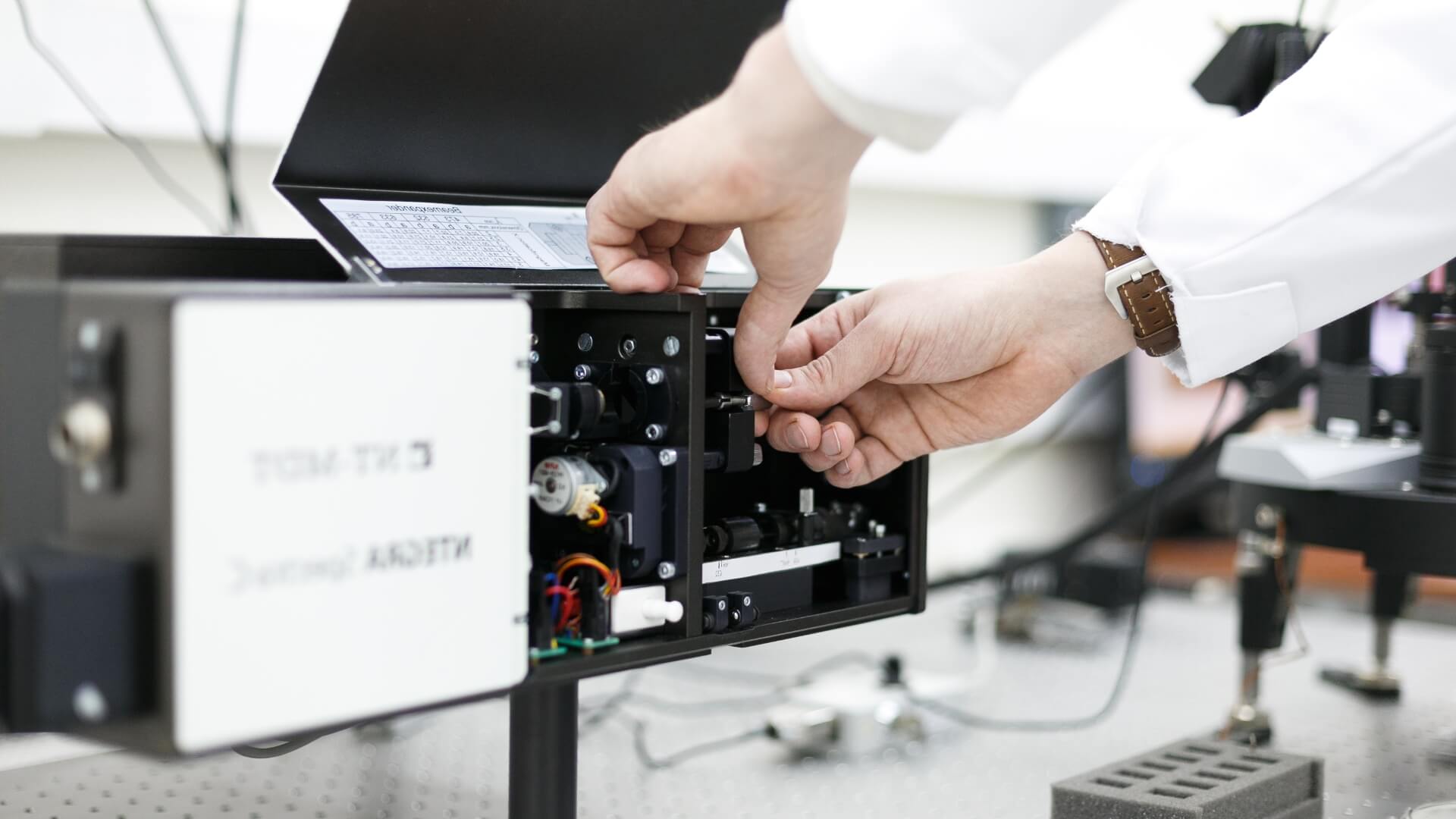
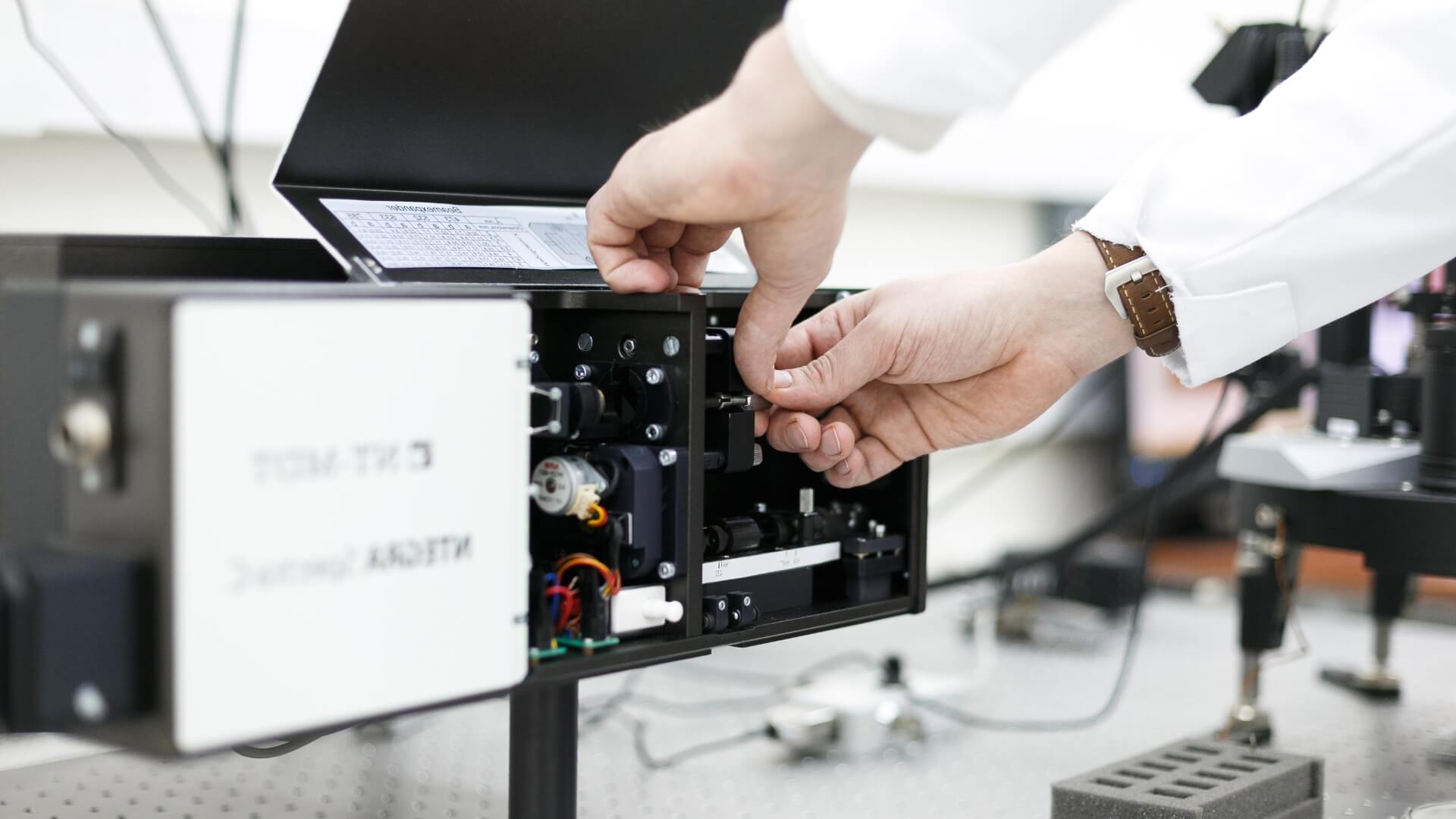
Luminescence thermometry experiment on a microelectronic device. Source: Applied Materials Today
The research team compared two thermometry methods using the synthesised nanoparticles. Secondary thermometry is a classical method in which specialists first determine the relationship between the indicator’s luminescence and temperature, and then calculate reference values for further measurements. Primary thermometry is a more complex method in which temperature is calculated directly from measured physical quantities using fundamental equations, without calibration against reference points. The developed material proved suitable for both methods when taking measurements in the range of 25–110 °C.
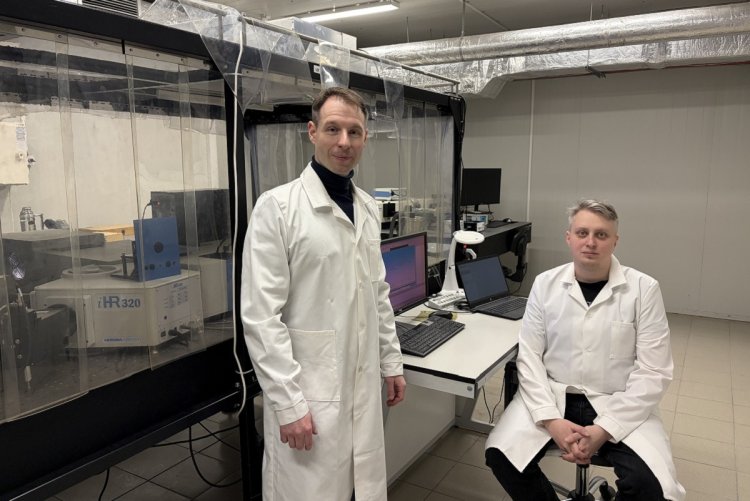
‘The sensors we have developed proved to be sufficiently effective thermal detectors operating in a range that is important for microelectronics applications. They will allow remote monitoring of heating in electronic components with high sensitivity. In the future, we plan to improve the reliability and accuracy of thermal state monitoring by simultaneous evaluation of several temperature dependent luminescent parameters,’ said Ilya Kolesnikov, project leader and specialist in spectrofluorimetry at the SPbU Research Park.
The scientists also conducted an experiment on a real microelectronic device — a graphics processing unit (GPU) of a video card. They applied a thin layer of the developed material onto the chip’s surface. By varying the load on the graphics processor, the researchers remotely monitored its heating. The results confirmed the reliability of the method: the data obtained via luminescence thermometry matched the readings from a thermal imager with a deviation of only 1–2 °C. Moreover, in the primary thermometry mode with infrared excitation (simulating heating), the deviation was even lower — approximately 0.9 °C.