Russian specialists have developed an artificial intelligence-based system capable of assessing the need for evacuation of the population in the face of floods and other natural disasters. The invention is aimed at working in conditions of lack of information, when specialists do not have an unambiguous solution. The developers intend to use data on the last major flood in Dagestan to train neural networks. According to rescuers, special services need similar technologies. However, the last word should remain with the person.
AI for evacuation decisions
Specialists from the Southern Federal University, together with colleagues from China, have developed an AI-based system that is designed to help make decisions about the evacuation of settlements in the event of various natural disasters, such as floods or typhoons. It is focused on working in conditions of data scarcity, when those responsible do not have a clear understanding of how to act in these conditions. The developers have already completed the theoretical stage of the project and are starting to implement the technology in the practice of special services.
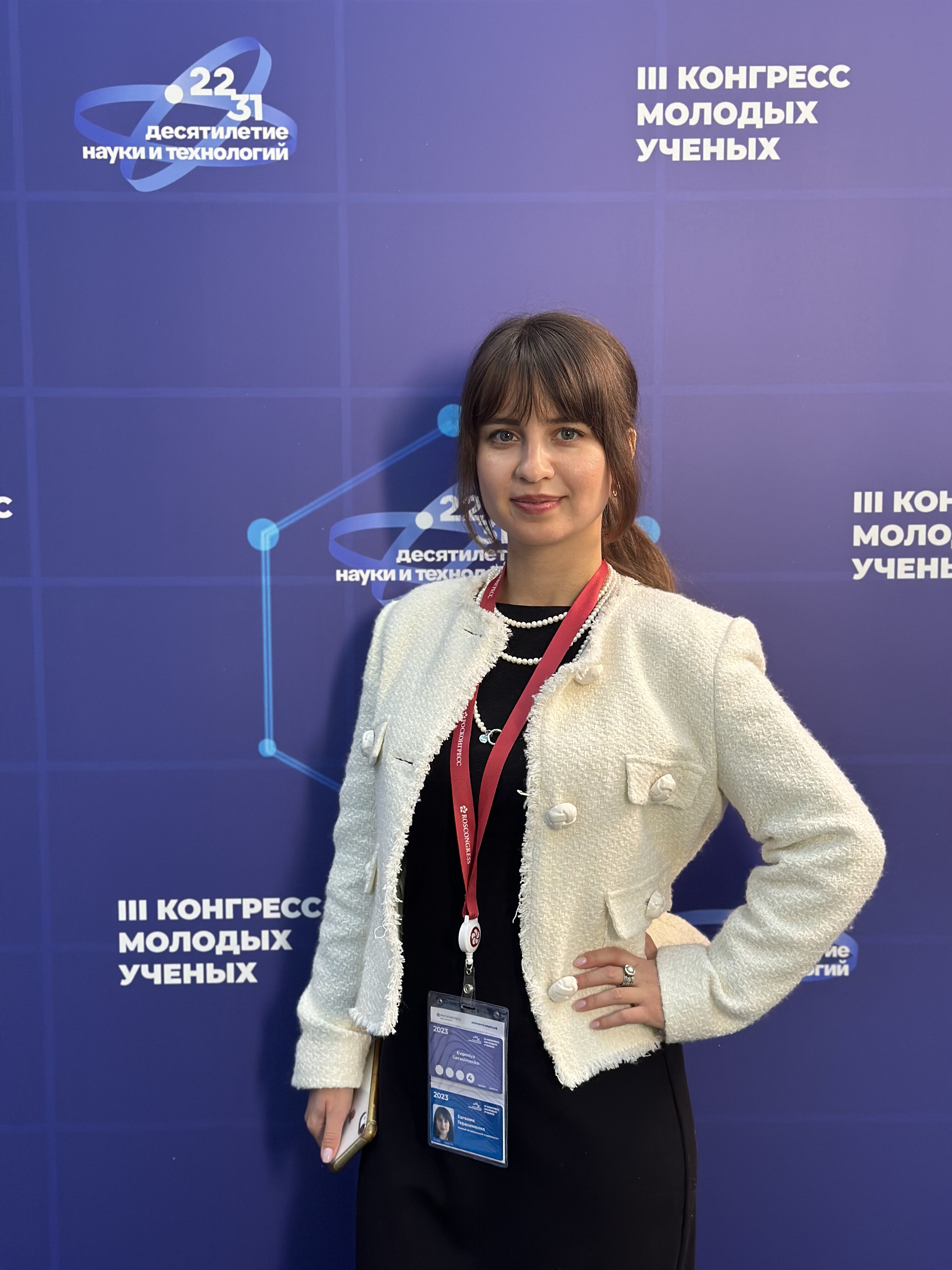
— The main idea of our work is to solve complex problems when there is a shortage of data. Therefore, we use various types of fuzzy logic. In case of emergencies, expert estimates are loaded into the model, depending on the current situation. Based on them and taking into account the statistics of past events, the machine issues a recommendation: "partial evacuation" or "urgent evacuation" or some other solution," said Evgeniya Gerasimenko, associate professor at the Institute of Computer Technology and Information Security of the Southern Federal University.
Evacuation experts are selected specialists in key areas of a particular emergency, such as meteorologists or logistics experts. In complex situations, the opinion of at least 20 experts can be taken into account to develop a solution, whereas in simpler cases, five to seven experts are sufficient. A set of numerical criteria is formed for each of them. At the same time, the system is able to process fuzzy estimates, converting them into a format suitable for analysis. It takes only a few minutes to find an answer.
To test the system's capabilities, the authors tested it using the example of Super typhoon Maria, which struck China in 2018. Then it took the evacuation of more than 500 thousand people. In order to make a decision, the AI analyzed seven aspects, for example, "the intensity of rains" and "the readiness of the population to evacuate." The results were formed in the form of a table of five possible options from "no evacuation needed" to "urgent evacuation", the preference of which was estimated as a percentage.
— Next, we plan to use the statistics of special services on various emergencies, such as the recent flooding in Dagestan, to train the neural network. Then we will begin to integrate our development into their practical activities," said Evgenia Gerasimenko.
Specialists are also engaged in integrating approaches to fuzzy decision-making with transport systems, while calculating how many people can be transported from dangerous areas to safe ones. In addition, the team is working on decision—making technology based on the opinions of a significant number of experts - 20 or more.
Helping rescuers
The last major natural emergency in the Russian Federation began in Dagestan at the end of March. Heavy rains hit Makhachkala, Derbent, Khasavyurt and other settlements that went under water. In some places, the depth reached 1.5 m. By April 3, more than 800 houses were flooded. A dam has burst in the Derbent district. More than 4 thousand people were evacuated.
— If such developments already exist, then they need to be applied. However, in any case, the decision should be made by a person based on the current situation. Natural conditions are constantly changing, and it is necessary to take this into account. And even if a bad alternative was chosen, it is being adjusted," said Sergey Makarov, head of the search and rescue unit of the Kamchatka branch of the Far Eastern Regional Search and Rescue Squad of the Russian Ministry of Emergency Situations.
Sergey Mikhailov, chairman of the Yalta city organization of the All-Russian Water Rescue Society (VOSVOD), agrees that rescuers need to introduce artificial intelligence technologies into their work.
According to Maria Sidorova, a senior researcher at the Hydrology Laboratory of the Institute of Geography of the Russian Academy of Sciences, such technologies need to be developed, but they have objective limitations. Artificial intelligence works most effectively in the presence of a large amount of data, whereas phenomena such as floods are events of rare occurrence. Because of this, it is extremely difficult to collect a sufficient amount of data for full-fledged training of models.
— You cannot "feed" the model with floods on other rivers, because there are different conditions there. Therefore, it is possible to implement such solutions only after they prove their effectiveness," the specialist said.
The development was supported by a grant from the Russian Science Foundation.